|
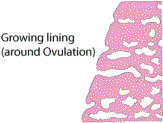
OVARIAN PHASES OF MENSTRUAL CYCLE : POSTOVULATORY PHASE OVULATORY PHASE There is another hormone, Leutinizing Hormone (LH) and a sudden surge of LH is an important point at this time in the cycle. Subsequent hormone events, leading to ovulation and the onset of menstrual shedding 13, 14 or 15 days after the LH peak occur at uniformly predictable times for all women. The LH surge initiates changes essential for rupture of the follicle and release of the ovum. The mature ovum is a spectacular sight, a bulge of 2 cm diameter on the surface of the ovary. Its rupture releases 5 cc to 10 cc of follicular fluid containing the pinhead-sized egg mass and may be accompanied by bleeding, giving rise to lower abdominal pain, many women get at this time. There is no appreciable change in the endometrium in 24 to 36 hours following ovulation.
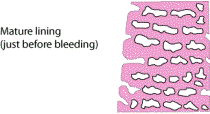
SECRETORY PHASE Technically, this phase begins at ovulation and includes the earlier phase. Under normal circumstances it is consistently 14 days in duration. Secretory phase does not occur if ovulation has not occurred. If pregnancy does not occur in that cycle, oestrogen and progesterone secretion declines. This causes a series of rapid regressive changes in the endometrium on the 13th, 14th days after the ovulation (27th-28th day of cycle), leading to menstruation within a few days. The glands expel their secretion, thus decreasing the thickness of the endometrium.
|